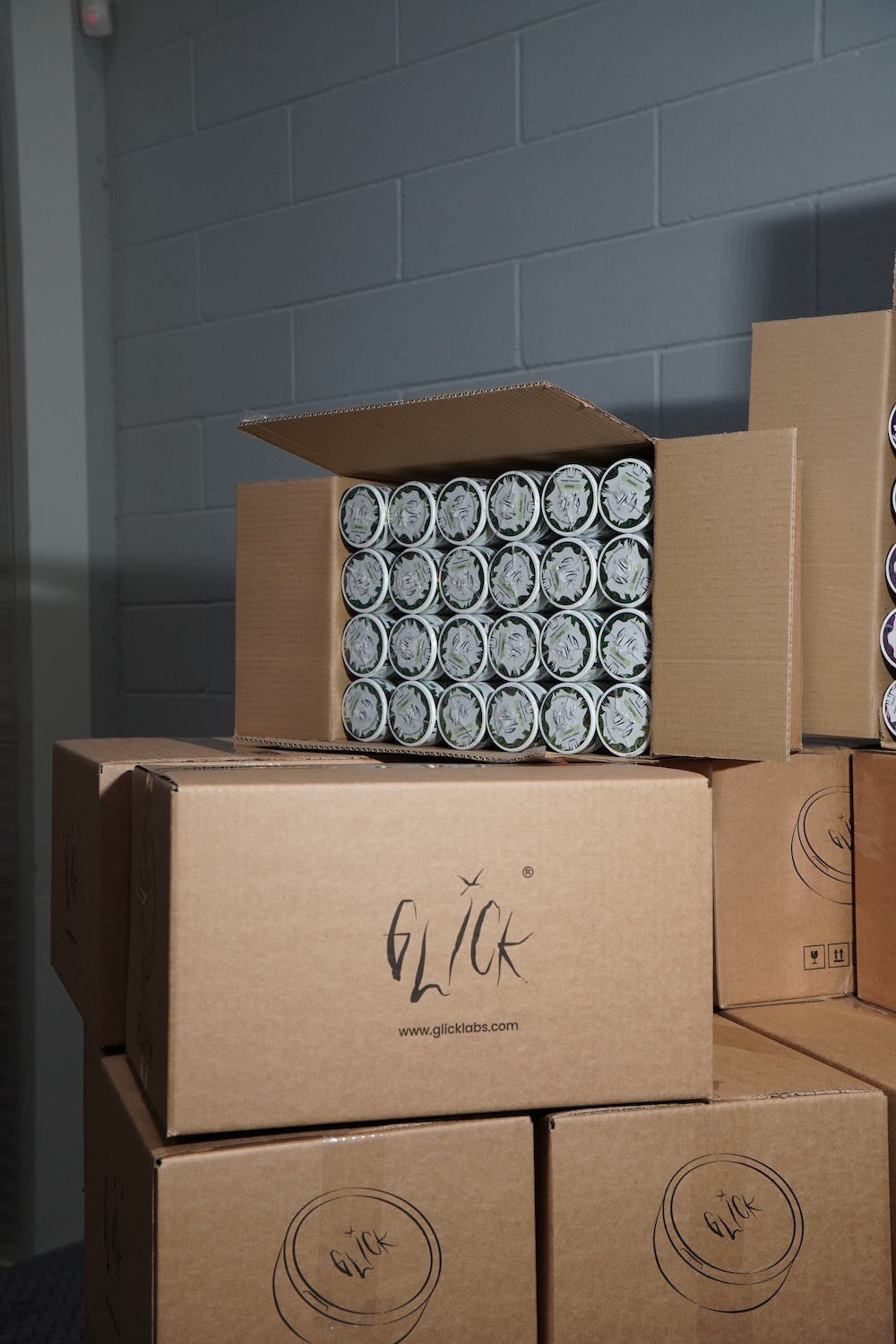
Private label and contract manufacturing solve the same surface problem — getting a product made without owning a factory — but they produce very different businesses. Private label means branding a product that largely already exists in a manufacturer’s catalog, with light customization like scent, color, or packaging. Contract manufacturing means the brand owns the product design, tooling, and intellectual property, and the manufacturer simply executes that spec.
Here is the core split at a glance:
Private label is the middle ground between reselling someone else’s brand and building a product from scratch. A manufacturer already has a working base formula or product design. You customize within their allowed parameters — a different flavor, a packaging change, an adjusted active concentration — and sell it under your brand name.
Retail is full of private label. Kirkland Signature, Trader Joe’s, and Target’s Up & Up are all private label products sold under retailer-owned names, manufactured by third parties. Most indie beauty, supplement, and food brands launching today operate the same way, just at smaller volumes.
Key characteristics of private label:
The trade-off is that a competitor can approach the same manufacturer and get a similar product with different tweaks. Your formula is yours in a practical sense, but rarely in a legal one.
Contract manufacturing is a different category entirely. You own the product design. The brand controls the engineering drawings, specifications, molds, and tooling. The factory executes your design to your tolerances, using your materials. Because the tooling belongs to you, the manufacturer cannot produce that product for anyone else.

This model shows up most in electronics, industrial components, specialty foods with proprietary formulations, and any category where the product itself is the competitive moat. It also applies directly to nicotine pouches and functional products where a brand wants to own a specific flavor profile, nicotine delivery mechanism, or ingredient blend.
Key characteristics of contract manufacturing:
The upfront investment is real. But what it buys is a product that is genuinely and exclusively yours.
The differences between these two models touch every part of how a brand operates.

| Factor | Private Label | Contract Manufacturing |
|---|---|---|
| Customization | Bounded by manufacturer’s existing capabilities | Unlimited, defined by brand’s own spec |
| IP ownership | Manufacturer usually retains formula | Brand owns design, tooling, and drawings |
| Upfront cost | Lower — mostly inventory and branding | Higher — NRE fees, tooling, engineering |
| MOQ | 1,000–5,000 units per SKU typical | typically starts at 5,000–25,000+ units |
| Speed to market | a few months | 6–18 months |
| Exclusivity | Limited — similar products available to others | Full — factory cannot replicate for competitors |
| Defensibility | Low to moderate | High when paired with patents or trade dress |
| Best stage | Early validation, limited capital | Proven demand, differentiation needed |

Choosing between these models is a long-term brand decision, not just a production choice. The model you pick now shapes your margins, pricing power, and competitive position for years.
Private label pros and cons:
| Pros | Cons |
|---|---|
| Faster launch timeline | Limited IP ownership |
| Lower upfront capital | Competitors can source similar products |
| Lower MOQs | Margin pressure as category gets crowded |
| Easier to iterate and test | Quality depends on manufacturer’s base standards |
Contract manufacturing pros and cons:
| Pros | Cons |
|---|---|
| Full IP and tooling ownership | High upfront NRE and tooling costs |
| Exclusive product design | Longer lead times |
| Stronger pricing power | Higher MOQs |
| Scalable with consistent quality | More operational complexity |
Consumer perception of private label has shifted significantly. Many private label products now match or beat national brands in quality, so the model is not inherently inferior. Quality depends on the manufacturer and the specs the brand demands.
The right model depends on where your business actually is, not where you want it to be.
Choose private label when:
Choose contract manufacturing when:
The phased approach most successful brands use:
Many brands launch with private label to test demand, then transition to contract manufacturing once sales are predictable. This is not a failure of ambition. It is capital efficiency. Spending $80,000 on custom tooling before you know whether anyone will buy the product is the mistake, not the model. Manufacturers sometimes blur the line by calling enhanced private label “custom,” so always clarify exactly who owns the formula and tooling before signing anything.
The biggest strategic mistake early-stage founders make is choosing manufacturing complexity before validating customer demand and distribution. A proprietary formula does not fix weak retention, poor conversion, or unsustainable customer acquisition costs. Solve those first.
Pro Tip: Before committing to contract manufacturing, run at least one private label SKU in the same category. Real sales data from a live product tells you far more about what customers actually want than any pre-launch survey.
A few practices that protect brands regardless of which model they choose:
The strategic trade-off is simple: private label optimizes for speed and low risk, contract manufacturing optimizes for control and long-term defensibility. Neither is universally better.
Quality control works differently depending on who owns the product spec. In private label, the manufacturer’s existing quality standards govern the base product. The brand can add inspection requirements, but the underlying formula and process are the factory’s domain. Batch-to-batch consistency depends heavily on the manufacturer’s internal controls.
Contract manufacturing flips that dynamic. Because the brand owns the spec, it also sets the quality standards, acceptable tolerances, and inspection protocols. The brand can require third-party audits, in-line inspections, and pre-shipment testing against its own documented criteria. That control comes with responsibility: the brand must define what “good” looks like in writing.
For regulated categories like nicotine pouches, nootropic products, and vape liquids, this distinction is especially consequential. Regulatory compliance documentation, ingredient traceability, and batch records all need to be contractually assigned to one party. Pouchsupply handles this through certified manufacturing processes that include ISO and Bureau Veritas standards, giving brands a documented compliance baseline regardless of which model they choose.
Timeline expectations vary widely by model and category.
| Stage | Private Label | Contract Manufacturing |
|---|---|---|
| Formula/design selection | a few weeks | several weeks to a few months |
| Sampling and revision | several weeks | a few months |
| Production run | about one to two months | several weeks to a few months |
| Total typical range | a few months | several months to over a year |
Private label’s speed advantage is real. A brand can go from manufacturer contact to first inventory in roughly three months for most beauty, supplement, and food categories. Contract manufacturing’s longer timeline reflects the engineering work: tooling design, mold fabrication, testing, and regulatory review all happen before a single production unit ships.
For functional pouch and nicotine product categories specifically, regulatory review adds time to both models. Building that buffer into your launch plan from day one prevents the cash flow problems that come from inventory arriving before approvals are in place.
Scenario 1: First-time supplement brand, limited budget. A founder wants to launch a caffeine and L-theanine focus supplement. No existing sales data, $30,000 in capital. Private label is the clear call. The category is established, the base formulas are proven, and the brand’s job is to find the right audience and positioning. Custom tooling spend at this stage would consume the entire budget before a single sale.
Scenario 2: Nicotine pouch brand with six months of sales. A brand has been selling a private label nicotine pouch for two quarters. Repeat purchase rates are strong and a specific flavor profile is driving most reorders. Now contract manufacturing makes sense. The brand knows exactly what customers want, can spec that flavor precisely, and owns the formulation going forward. Pouchsupply’s nootropic and functional pouch manufacturing capability supports exactly this transition, with custom formulation and scalable production up to 1,000,000 cans per month.
Scenario 3: Established CPG brand entering a new category. A brand with existing distribution and a loyal customer base wants to launch a new product line. They have the capital, the demand signal from their existing audience, and the operational infrastructure to manage longer lead times. Contract manufacturing is the right starting point. The brand’s existing equity justifies the investment in a proprietary product from day one.
Private label suits brands that need speed and low risk; contract manufacturing suits brands that need ownership and long-term defensibility, and the right time to switch is when demand is proven and repeat purchases are stable.
| Point | Details |
|---|---|
| IP ownership is the core difference | Private label keeps the formula with the manufacturer; contract manufacturing transfers it to the brand. |
| Private label launches faster | Typical timelines run a few months versus 6–18 months for contract manufacturing. |
| MOQs reflect the model | Private label runs 1,000–5,000 units per SKU; contract manufacturing typically starts at 5,000–25,000+. |
| Phased approach reduces risk | Launch with private label to validate demand, then move to contract manufacturing once sales are predictable. |
| Quality control shifts with ownership | Contract manufacturing lets brands set their own quality standards and inspection protocols from the start. |