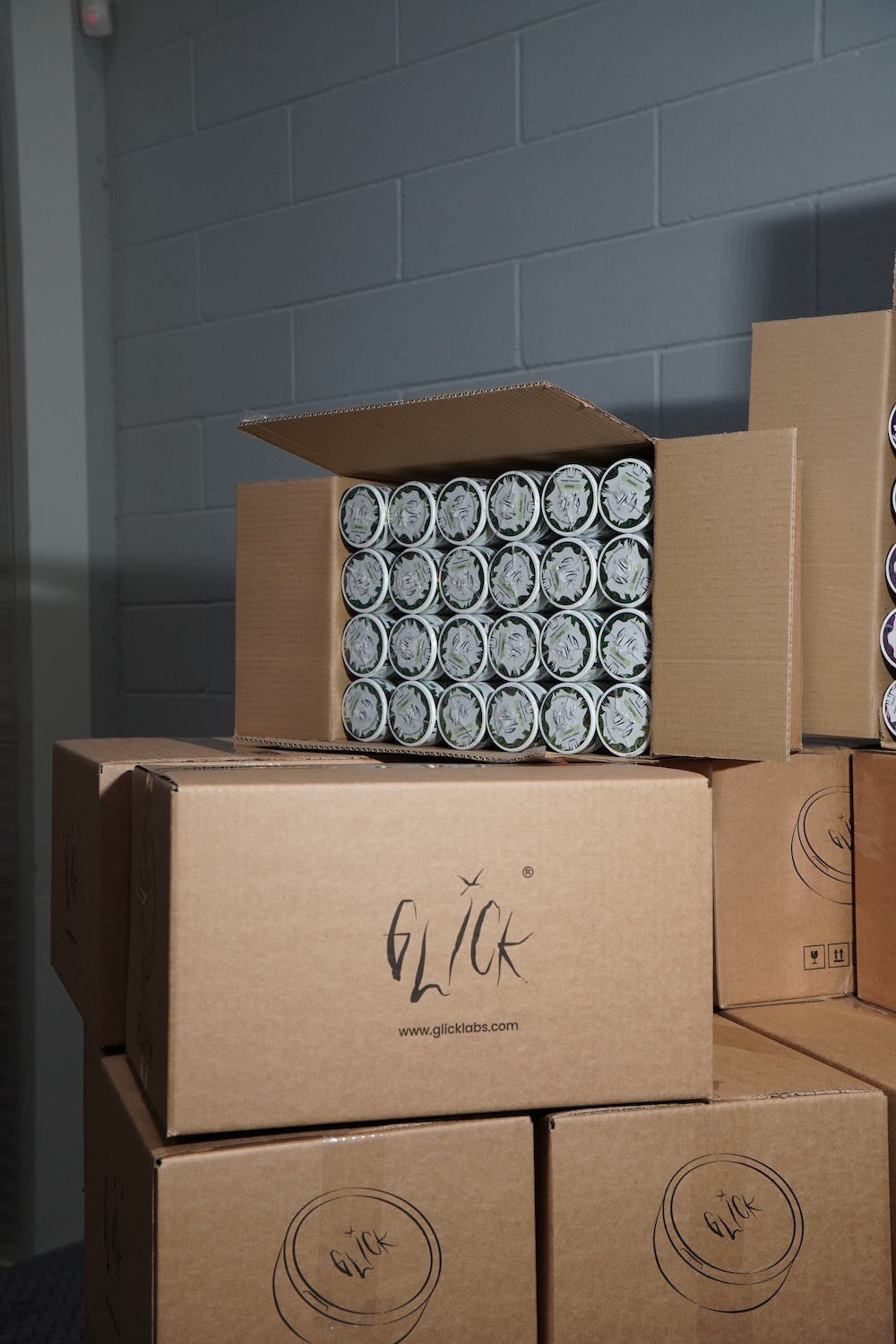
The fastest route to commercial vitamin, functional, nicotine, or caffeine pouches is a turnkey white-label manufacturer that handles formulation, high-barrier packaging, regulatory documentation, and sample approval in a single workflow. Splitting those responsibilities across multiple vendors adds weeks of coordination time and multiplies the points where a batch can fail compliance review. The right contract partner covers all of it.
Before your first vendor call, do three things:
Pouchsupply operates as a full-service turnkey partner for nicotine, caffeine, nootropic, and functional (vitamin) pouches, covering every step from formulation through delivery.
Pro Tip: Ask every prospective manufacturer whether they handle formulation in-house or outsource it. Outsourced formulation adds a hidden vendor layer that can delay samples and complicate IP ownership.

The short answer: a lot more than filling pouches. A credible contract manufacturer in this space handles the full product lifecycle, not just the physical production step.
Core service deliverables to expect:
Two distinct service models exist in the market:
| Service Model | What You Supply | What the Manufacturer Supplies |
|---|---|---|
| Turnkey | Brand brief and artwork | Formulation, ingredients, filling, packaging, QC, documentation |
| Packaging-only | Finished bulk product | Filling, sealing, labeling, packaging |
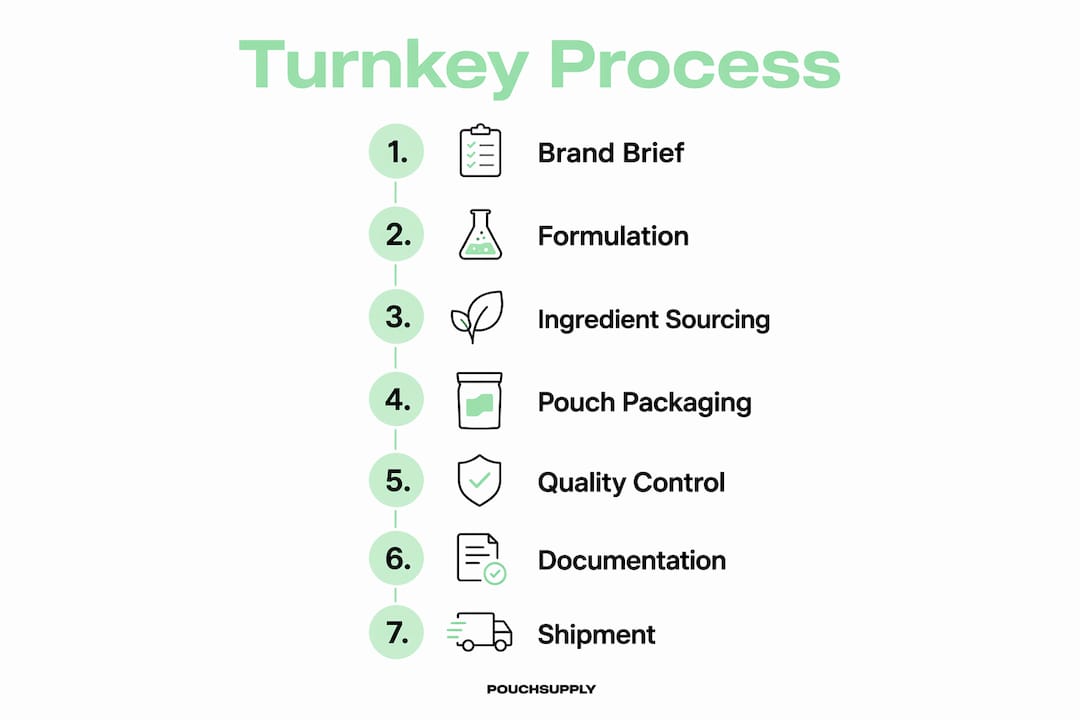
Turnkey partnerships that bundle formulation, ingredient sourcing, and packaging tend to shorten time-to-market and improve batch consistency compared with managing separate vendors. If you don’t have a finished formula, turnkey is the only realistic path.
Reputable packagers also operate in temperature- and humidity-controlled environments to protect product stability during filling, which matters especially for moisture-sensitive vitamins and nootropics.
Pro Tip: The best packaging partners act as an extension of your brand team, advising on materials and finishes before you commit to a full run. If a supplier only takes orders without asking questions, find a different one.
Start with a non-negotiable checklist, then go deeper with technical and commercial questions on the call.
Must-have capabilities:
Technical questions to ask:
Commercial questions:
Delays often stem from incomplete artwork that fails regulatory checks. Require your manufacturer to provide an FDA-compliant artwork review checklist before production starts.
Pro Tip: Send a test brief before signing anything. A manufacturer’s response time, the quality of their questions back to you, and whether they flag regulatory issues proactively tells you more than any sales call.
Pouchsupply runs an eight-stage workflow from initial brief to delivery. Here’s how it maps to realistic timelines:
| Stage | Activity | Typical Duration |
|---|---|---|
| 1. Consultation | Product brief, ingredient targets, format, MOQ | 1–3 days |
| 2. Formulation | Base formula selection or custom development | 1–2 weeks |
| 3. Sample development | Physical samples produced and shipped | 1–4 weeks |
| 4. Sample revision | Feedback incorporated, revised samples if needed | 1–2 weeks |
| 5. Packaging and artwork | Label design, can selection, artwork approval | 1–2 weeks |
| 6. Order confirmation | Final spec, pricing, payment terms locked | 2–5 days |
| 7. Commercial production | Mixing, filling, canning, QC, labeling | Up to 30 days |
| — | Shipping to agreed destination | Varies by region |
The standard minimum order can be split across up to three SKUs, allowing flexible quantities per SKU depending on the total ordered. One pallet capacity matches typical industry standards.
Production capacity is substantial, making Pouchsupply a viable partner for both early-stage brands testing a market and established distributors scaling volume.
Formulations can include nicotine, caffeine, L-theanine, theobromine, botanical extracts, vitamins, and other functional ingredients. Flavor options span mint, fruit, citrus, berry, and beverage-inspired profiles, with custom combinations available. Brands interested in nootropic and functional pouch SKUs can discuss specific cognitive or energy-focused actives during the initial consultation.
Format and material choices directly affect shelf life, fill-line compatibility, and unit cost. Getting this wrong at the spec stage is expensive to fix mid-production.
Common formats and their use cases:
High-barrier metallized films and multi-layer laminates are the standard recommendation for vitamins and active ingredients that degrade with moisture, oxygen, or light exposure. Specifying barrier ratings in writing protects you if a batch arrives with compromised potency.
Design constraints that affect machine compatibility include gusset dimensions, valve ports for powder products, fill orientation, and seal width. Finishing options like matte lamination, UV spot coating, and tamper-evident seals are available from most converters. Some suppliers also offer recyclable or post-consumer recycled laminates for brands with sustainability requirements, though barrier performance trade-offs apply.
New brands frequently focus on aesthetics and overlook machine compatibility. Matching your pouch format to your fill equipment is one of the most common and avoidable launch delays.
Pro Tip: Always request a physical mock-up or pre-production sample in your exact pouch spec before approving artwork for print. Dimensions that look fine on screen can cause fill-line jams or seal failures at scale.
U.S. brands have a specific compliance baseline to clear before a commercial run. Missing any of these creates delays at import or retail.
Facility and certification checks:
Required documentation per batch:
Operational notes:
Pro Tip: Require your manufacturer to provide a label-compliance checklist specific to your product category before artwork is finalized. Catching a non-compliant claim at the artwork stage costs nothing; catching it after printing costs everything.
Quality control isn’t a single checkpoint. It’s a chain of verifiable steps, and you should be able to see documentation for each one.
| QC Stage | What to Verify | Documentation |
|---|---|---|
| In-process fill check | Weight/count accuracy per pouch | Production log |
| Seal integrity | No leaks, consistent seal width | Visual inspection record |
| Batch COA | Active-ingredient content vs. label claim | Third-party lab report |
| Microbial testing | Yeast, mold, total plate count | Lab certificate |
| Stability testing | Potency retention over shelf life | Stability study report |
| Packaging migration | Ink and adhesive migration from film | Migration test certificate |
Manufacturers that print and convert pouches should hold food-safety certifications such as SQF Level 2 to confirm packaging is safe for direct contact with consumable products. Beyond certifications, ask whether on-site audits or factory inspection reports are available. A manufacturer that won’t allow audits is a manufacturer with something to hide.
COAs and in-line QC checks during production are the minimum documentation standard for any credible contract manufacturer in the supplement and functional pouch space.
Primary cost drivers:
Realistic MOQ and timeline expectations:
Turnkey options reduce upfront inventory risk because you’re not sourcing ingredients, packaging materials, and a filler separately. Each split-vendor arrangement adds its own MOQ, lead time, and coordination overhead. For brands launching their first SKU, that overhead is often the difference between a 90-day launch and a 180-day one.
Pro Tip: Ask whether sample costs are credited against your first production order. Many manufacturers offer this; those that don’t are charging you twice for the same development work.
A turnkey white-label manufacturer that covers formulation, barrier packaging, QC, and documentation is the fastest and lowest-risk path to commercial vitamin or functional pouches in the U.S. market.
| Point | Details |
|---|---|
| FDA registration is the floor | Confirm facility registration and NSF/GMP certification before any other conversation. |
| Sample timelines signal capacity | Reputable manufacturers deliver physical samples in 1–4 weeks; longer than that usually means a sourcing or capacity problem. |
| Barrier film specs belong in writing | Metallized laminates protect potency; require the barrier rating in your production agreement. |
| Turnkey beats split-vendor for speed | Bundling formulation, filling, and packaging in one partner compresses launch timelines and reduces compliance risk. |
| Pouchsupply’s starting MOQ | 7,200 cans per order, splittable across up to three SKUs |
Most brands that split their manufacturing across separate formulators, fillers, and packagers underestimate the coordination cost until they’re three months into a launch delay. The friction isn’t dramatic. It’s a week waiting for a COA from one vendor before the next can schedule a run. It’s an artwork file that meets one supplier’s spec but not another’s. It compounds quietly until the launch window closes.
Turnkey manufacturing eliminates most of that. When formulation, barrier packaging, QC, and documentation live under one roof, the handoffs are internal, the accountability is clear, and the timeline is predictable. For a brand entering the U.S. functional pouch market, where regulatory documentation requirements are specific and shelf-life expectations are high, predictability is worth paying for.
Pouchsupply’s approach combines formulation expertise with barrier packaging and in-process QC, which is exactly the combination that produces consistent shelf life and fewer launch surprises. Brands that have worked through the full launch process know that the documentation and sample-approval stages are where most delays happen. A manufacturer who owns those stages is a manufacturer who can actually commit to a date.
Pouchsupply gives brands a direct path from concept to commercial production for nicotine pouches, caffeine pouches, nootropic and functional pouches, and custom vape liquids. The concrete advantage over assembling your own vendor stack: one point of contact, one production timeline, and documentation that arrives with the shipment rather than chasing three suppliers for it.

Before reaching out, prepare the following:
Pouchsupply’s team will review your brief, recommend a formulation route, and confirm a sample development timeline. For brands that need nootropic or functional pouch SKUs with specific cognitive or energy actives, the consultation covers ingredient compatibility and regulatory considerations for your target market. Request your consultation at pouchsupply.eu.
How to read a COA: Check that the tested values for each active ingredient fall within the label claim range, confirm the testing lab is accredited (ISO/IEC 17025 is the standard), and verify the batch number matches your production order. An MSDS document tells you handling, storage, and hazard information for each ingredient. Both documents should arrive before or with your shipment, not after you ask for them.